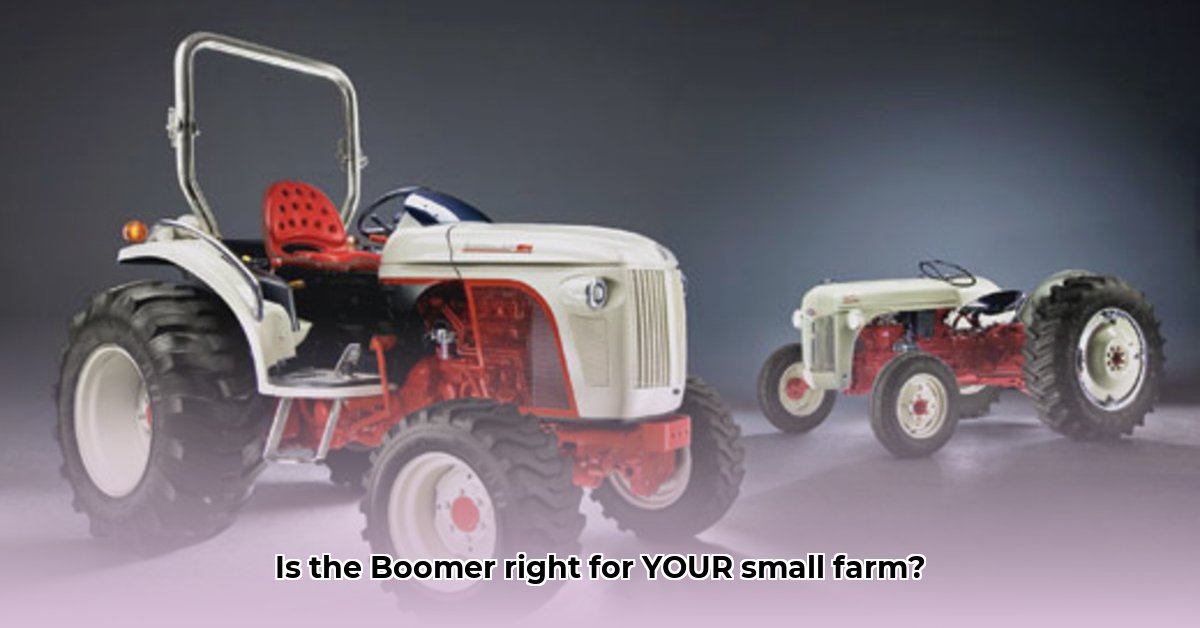
The New Holland Boomer tractor series is a popular choice for small-scale farmers, landscapers, and property owners seeking a versatile and manageable machine. Offering a horsepower range generally between 35 and 55 horsepower, these compact tractors are designed for a variety of tasks on smaller properties. This review delves into the Boomer's strengths and weaknesses, highlighting its ease of use while acknowledging crucial data gaps that require further research. To learn more about New Holland's manufacturing locations, check out this helpful resource: New Holland origins.
Power and Performance: A Workhorse with Unanswered Questions
New Holland Boomer tractors are built to handle demanding tasks, from plowing and planting to mowing and hauling. While the advertised horsepower range (35-55 HP) is a significant selling point, a comprehensive assessment requires more detailed information. Precise fuel efficiency figures, vital for calculating operating costs, are currently unavailable. Similarly, data on long-term maintenance costs, including potential repairs and part replacements, is limited. Understanding the Boomer's long-term reliability requires extensive field testing and user feedback, which is currently lacking. This lack of data prevents a thorough comparison with competing compact tractors.
User-Friendliness: Intuitive Design for Ease of Operation
Early reports suggest the Boomer series prioritizes user-friendliness. The controls are reportedly intuitive, and the overall design is described as clean and less overwhelming than some competitor models. This ease of use is a significant advantage, simplifying operator training and daily use. However, more comprehensive user reviews are needed to confirm this positive initial impression. Detailed feedback across different experience levels will help identify potential pain points and verify the long-term ease of operation. Additional user testimonials would significantly strengthen our understanding of the user experience.
Competitive Analysis: A Need for More Data
Direct comparison with competing compact tractors is currently hampered by insufficient data. Key factors like fuel efficiency, total cost of ownership (including purchase, fuel and maintenance), and long-term reliability are lacking for a comprehensive competitive analysis. More research is crucial to fully assess the Boomer’s position within its market segment. This analysis should incorporate data from similar tractors in terms of price, features, and operational costs.
Actionable Insights for Different User Groups
The suitability of a New Holland Boomer tractor depends heavily on individual needs.
Small-Scale Farmers: Prioritize the evaluation of field performance and operating costs. Conduct thorough research into long-term costs, including potential repairs and resale value. Consider the tractor's suitability for specific farming tasks.
Landscapers: Assess the tractor's maneuverability and efficiency across various terrains. Analyze features offering precision and control for landscape tasks. Evaluate both the initial investment, and the overall operating and maintenance costs.
Property Owners: Focus on affordability, evaluating estimated yearly maintenance costs. Consider the tractor's durability and longevity, planning for potential repairs and replacement parts that might be needed in the future.
Conclusion: A Promising Tractor with Room for Improvement
The New Holland Boomer tractor series demonstrates considerable potential, especially for its ease of use. However, crucial data is missing to provide a complete and definitive review. Further research into fuel efficiency, long-term maintenance costs, and a comprehensive competitive analysis are necessary. Only with more comprehensive data can we provide a complete and accurate assessment of the Boomer’s value proposition for different user groups. This information will definitively pinpoint whether it’s the perfect choice for your specific needs.